Showing posts with label books. Show all posts

Wednesday, May 1, 2013

screen-free week: storytelling

“Story-telling is almost the oldest art in the world - the first conscious form of literacy communication.”   - Marie L. Shedlock, The Art of the Story-Teller

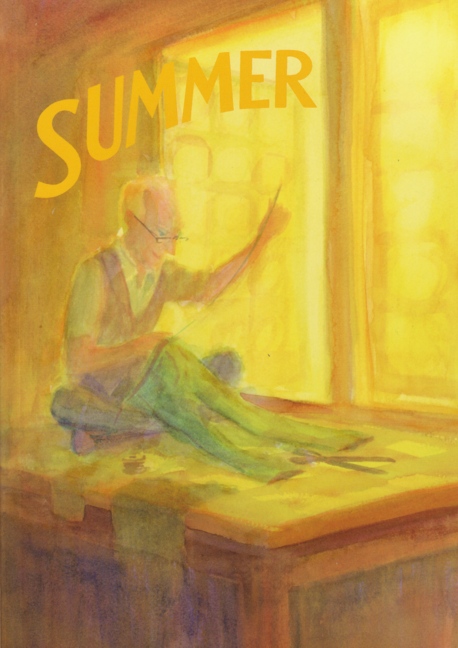
For today's Screen-Free Week hand-out we provided copies of a sweet tale called "The Bubble Story" from the Wynstones Press book Summer as our take home activity.  Along with the story was this short list of great storytelling resource materials for very young children:
(We're providing these materials primarily for children of pre-school and kindergarten age.)

What better way to fill our screen-free time than with the endlessly imaginative world of stories? As entertainment goes, listening to and reading stories are probably the most parallel replacements of television shows and movies that weʼll find. Not only do stories serve as fanciful diversions, they likewise help children develop concentration, memory, creativity, literacy, morality and verbal communication skills. They also aid developing people of all ages in understanding both their inner and the outer world.

One very important element of Waldorf Education in the early childhood years is the fostering of a childʼs creativity and imagination. It does this, not through providing fantastic stories that excite children, but rather through creating an environment which allows and encourages a child to exercise the parts of his or her being needed for life-long creativity and original thought.  To do this, the child must be inwardly active. This is accomplished when the child must, out of her own inner picturing, create what the “castle” or “princess” or “dragon” is.

When images are supplied for children, we rob them of the opportunity of creating them themselves. Even illustrations in books take away from the childʼs exercising of her image- forming capacities. But with illustrations at least the child must bring those pictures into movement using her imagination. In video form, the pictures that move by themselves can actually hamper a childʼs development.

Stories, of course, come in all shapes and sizes ranging from simple incident narratives to exceedingly complex, interweaving machinations. Of course, stories will be different for each of the changing stages of a childʼs development, but there are endless supplies of books, anthologies and real life experiences that can be the source of tales told as we sit enjoying quality time together.
We can read stories from books, perform them as simple puppet shows or even act them out.  Remember that our own lives, personal history and imagination are some of the greatest story resources we have.


     “One of our most human capacities is the ability, as well as the need, to create stories. It is through the medium of story that we make meanings of our life. We each have our own personal story, which dynamically changes as our understanding and integration expand. Bruno Bettelheim tells us that the young child achieves “understanding, and with it the ability to cope, not through rational comprehension... but by becoming familiar with (life) through spinning out daydreams - ruminating, rearranging, and fantasizing about suitable story elements in response to... [life] pressures.”
     Through the use of story, we can give our children powerful tools necessary to make sense of their lives. Stories offer our children examples of solutions for the difficulties they will encounter as they grow and develop. They also image for our children various qualities of character that will aid them in these difficulties. These images can lay a foundation of strength that will serve them for a lifetime...
     Not only does the realm of story help growing children make sense of their inner experience, it can help them understand the way the outer world works, as well...””
                -   from Heaven on Earth, A Handbook for Parents of Young Children by Sharifa Oppenheimer

“In his book A is for Ox, Professor Barry Sanders develops the thesis that true literacy, and the ability to reflect upon oneʼs self and oneʼs actions, which it encourages, can only be based upon a firm foundation of oral language. His book provides a fascinating and cogent argument why, as he states, “The teaching of literacy has to be founded on a curriculum of song, dance, play, and joking, coupled with improvisation and recitation. Students need to hear stories either made up or read aloud. They need to make them up themselves or try to retell them in their own words... He also shows that this continuing emphasis on the spoken word in schools needs to be built upon the oral foundation provided by the parents in the home, through conversation, singing, nursery rhymes and stories...”
                - from You Are Your Childʼs First Teacher by Rahima Baldwin Dancy

Tuesday, January 17, 2012

bubble trouble

I usually post a list of our favorite books for the current season and, most often, they're based in a world of gentle imagination or in a wholesome farm, field or forest environment and include one or a number of spirits of nature.  I'd like of step out of that mold and talk about one of our very favorite children's publications that's just a silly and whimsical, rhyming and rollicking good read.


Bubble Trouble by Margaret Mahy begins with Little Mabel blowing a bubble that ensnares her baby brother and wafts him away.  She and Mother take off after him as he blows over various townspeople who join in the attempt to bring him safely down.  The story isn't much really but the ridiculous, nonsensical (and sometimes tongue tying) rhyme scheme in this book has us giggling every time.  Just read this excerpt...
...There was such a flum-a-diddle (Mabel huddled in the middle),
Canon Dapple left the chapel, followed by the chapel choir.
And the treble singer Abel threw an apple core at Mabel,
as the baby in the bubble bobbled up a little higher.
Oh, they giggled and they goggled until all their brains were boggled,
as the baby in the bubble rose above the little town.
"With the problem let us grapple," murmured kindly Canon Dapple,
"and the problem we must grapple with is bringing Baby down..."
So much fun, don't you think?  Ryan and I actually beg to be the one to read this to Naiya and she nearly knows the entire thing by heart.  (My husband is the one who encouraged me to share this gem on my blog.)  Actually, we've given this book to a number of friends and family and I'm not sure if it's the parents or the kids who enjoy it more.  Maybe it can become one of your favorites too.

Monday, January 2, 2012

winter books

We've begun to put our festival books away already and I realize I never posted about all the sweet stories we read and re-read throughout the season.  There are so many that I figured I'd dedicate this post to those primarily associated with winter and not so much with specific holiday celebrations.  (Perhaps I'll back-post a "Christmas Books" list in the weeks to come.) 

One of our long-standing winter favorites is The Mitten adapted and illustrated by Jan Brett.  In this traditional Ukrainian tale, Nicki loses his white knit mitten in the snow.  The mitten is subsequently discovered by a growing number of animals who crawl inside the ever expanding weave to try to keep themselves warm on a cold winter day.  When finally a mouse crawls atop the bear's nose to snuggle in as well, the bear sneezes and the whole lot of furry friends are expelled from their makeshift shelter.
We like to re-enact this tale for puppet shows using our animals and any stray mitten or glove we find laying about.


A new addition to our winter collection is Owl Moon by Jane Yolen with illustrations by John Schoenherr.   This is a Caldecott Medal winner that we love for its beautiful and touching simplicity.  There isn't much of a story with this one - just a girl and her father walking in the woods on a winter night looking for owls.  It's a tale of wordless companionship in a hushed but magical world.  The understated narrative is a testament to the power of silence and the enchantment of the natural environment.


Two years ago, when storytelling as applicable to the seasons really became relevant for our young toddler, we discovered The Tomten by Astrid Lindgren with illustrations by Harold Wiberg.  I hadn't previously heard of this mythical little Scandanavian creature who guards farms at night but, from what I've read, he's somehow connected to the "soul" of the farmland over which he watches.  In this story, which so beautifully depicts the soft snowy silence of the forest farm, the Tomten looks after the various animals while the farmer and his family slumber.
(For an additional treat, check out The Tomten and the Fox by the same author and illustrator.)


Another offering from Jan Brett that provides a nice transitional tale from winter into spring is her beautifully illustrated Annie and the Wild Animals.  In this sweet story, Annie attempts to find herself a suitable new companion after her cat mysteriously disappears.  As with all Jan Brett picture books, what we especially love is searching through the borders and rich, imaginative drawings for clues and surprises.  This one contains foretellings of the birth of spring as well as the return of the missing cat with a new litter of kittens.  (Especially appropriate for us considering the newest members of our family.)


And what seasonal book list of mine would be complete without the pertinent book from Cicely Mary Barker's Flower Fairie Collection?  Flower Fairies of the Winter is another gorgeous assemblage of water colored fairie illustrations with accompanying poems and amazingly accurate botanical drawings of common winter flora.
Naiya loves the rhymes and I, as always, love that I can not only enjoy the beautiful pictures, but use them to help identify all the lovely winter foliage sprouting up around our neighborhood.


What are your favorite Winter books?

Thursday, September 29, 2011

michaelmas

A festive and meaningful Michaelmas to all on this profound holiday.


I thought I was going to write something about Michaelmas that included an explanation of the beautiful and quite esoteric nature of its symbols and stories but with all the birthday planning and visitors and cleaning, I'm afraid it will have to wait.  What I would like to do is just share the way the struggle of will and consciousness conquering desire and psychological sleep is manifesting in a cute and cuddly way for our daughter in our home.  As with all meaningful celebrations, we don't talk to our almost-five-year-old about the internal significance and substance of these observances but just let the stories and pictures act upon and through her in a gentle subconscious manner.


For a few days now we have been reading (with a fair amount of editing) the wonderful story of St. George and the Dragon as retold by Margaret Hodges.  There aren't a great many picture books out there for Michaelmas and this is one we really enjoy.

To hold the pictures of the story, we set up our Nature Table for Michaelmas to include a scene from this book (as seen in the photo up top).  A pattern for the sweet Michaelmas dragon can be found at  Rhythm of the Home.


When Naiya arrived home from school today we decided to bake Dragon Bread for the first time using a recipe we found here.


Additionally, at school today, some of the classes died silks with calendula flowers for the children to wear as capes, others crafted paper crowns from their yellow watercolor paintings.  In Naiya's kindergarten, the children helped to make the darling throwing stars seen below to celebrate the day.  (Inside is a sealed cloth packet of corn kernels with ribbons sewn on.  The children's portion of the craft was to place the packet inside and then stitch up the star's edge with yarn.)

Since we're always looking for ways to bring these holidays to the children I thought others might find some of these ideas and discoveries useful.  To that end, lastly I'd like to share this story that I found in Autumn from Wynstones Press which is especially nice for very young children:


"The Kite" by U. de Haes
    Once upon a time there was a boy whose father helped him make a kite.  They worked on it in the winter, until its wooden cross was surrounded by transparent paper of yellow, red and blue.
   In the summer the boy flew his kite and the sun was so pleased with its colours that he sent his clearest rays of light.  And so the kite looked like a flaming cross in the sky.  The boy let his kite rise as high as it could until the string came to an end and the kite could go no further.
   Whoosh!  Then came a gust of wind.  The string snapped and the kite went flying into the sky.  The boy saw it rise higher and higher.  Soon the kite had gone so high that he could barely see it.
   Up there in the blue there was much to be seen.  First the kite saw a crow.
  “Good morning,” croaked the crow.
   “Good morning,” replied the kite.
   “Are you a bird, with your flaming wings and long tail?”
   “No, I am not a bird.”
   “What are you then and from whence do you come?”
   “I come from the lad standing down there; he made me himself.”
   “And where are you going?”
   “That I do not know.  I want to fly into the sky.”
   “Then you do not belong here.  Up here every being knows whence he comes and whither he goes.  I fly every winter to the south, and every summer to the north.  I advise you to return to the human beings below, for if you do not know where you are going, you will lose your way in heaven.”  But the kite was determined and rose further into the heights.
   Then the kite met a seed.
   “Good day,” whispered the seed.
   “Good day,” replied the kite.
   “Are you also a seed with your roots and shoots?”
   “Not I.”
   “Where are you going?”
   “I do not know.  I want to travel into heaven.”
   “Then you do not belong here.  Up here everyone knows where he is going.  I sail through the air and take in that which moves from the east to the west - the warmth of the sun.  When I have taken it into myself, I travel down again and bring it to the earth.  The earth then lets a flower grow out of me.  If you do not know what to do, I advise you to descend to the earth or you will lose your way in these heights.”  But the kite did not hear and soared higher.
   Then he glided past a cloud.
   “Good evening,” murmured the cloud.
   “Good evening,” said the kite.
   “Are you a cloud with your flaming sunset red?” asked the cloud.
   “No, I was made by human beings.  I came from the boy down there.”
   “And where are you going?”
   “Oh, only into the sky.”
   “Then you do not belong here.  Everyone here knows his purpose.  I collect the last red of the sunset and turn it into the red of the sunrise.  I rain down with the red of the sunrise and bless the earth and when I have done that the sun carries me up once more, so that the red of the sunrise can again be made.  And so I travel up and down.  I advise you to go back to the boy, for without a goal you will lose your way up here.”  But the kite would not return and rose higher.
   Then he came to the stars.
   “Good night,” sang the stars.
   “Good night,” sang the kite with them.
   “What news do you bring to us, you comet of the earth?” sang the stars.
   “I come from the boy who lies sleeping down there on the earth,” said the kite.  “He is waiting until I return but in the meantime he has fallen asleep, and is dreaming about me.”
   “We ask you to take our blessings back to the boy,” sang the stars and every one of them gave the kite some of their light.
   Then came the Angel Michael.  He took a star and hurled it towards the strange newcomer.  The kite burst into flames and like a torch plunged into the depths.
   The boy awoke from a dream.  But when he looked around he realised that it could not have been an ordinary dream for next to him lay the cross of his kite and the coloured paper had been devoured by flames.
   And the cross was no longer wooden but was of bright, heavenly iron.  The boy was astounded when he saw that.  But he was also vexed because his beautiful kite was gone.
   At home his father comforted him:  “Let us be glad.  If your kite was not burnt you would never have received this cross of heavenly iron.  This iron is lighter than the lightest wood and stronger than the strongest steel.  Let us use it to make a new kite.”
   This they did.  And next summer when the kite rose to the heavens he again met those who traveled from north to south, from east to west and from heaven to earth.  And when he came to the stars he again met Michael and again he plunged burning to the earth.  But the cross of heavenly iron shone even more brightly than before.
   And this happened for many years and with every year the cross became brighter and stronger.  And when the boy had grown up the cross took on a different form:  it turned into a shining sword which gleamed with the light of the stars.  With this sword the growing man traveled through the world and he became a knight and servant of Michael.

Monday, July 25, 2011

the earth's population is actually slightly more than 50% female

   When Naiya was just a baby and I read books to her more for my own entertainment than for her edification, I began to notice the lack of girls (or female characters, animal, person or otherwise) in children’s literature.  At first I thought it must just be my particular selection of books, but as our library expanded and I made a concerted effort to acquire stories about or including female characters, I discovered that the deficiency was pervasive.  Dare I say that the omissions began to feel sinister?  I couldn’t believe that the choice of the masculine pronoun for almost every animal that wasn’t a mother and nearly every character who played an active role in the advancement of the simplest plot was intentional by the authors of even the most beautiful of stories. 
   Of course, it is part of our language to refer to the unknown in the masculine.  I hadn’t reflected upon it much before, but I soon began to notice that every bird, squirrel, spider, slug and cat we saw as we encountered them on various walks and hikes around our neighborhood were referred to, almost without exception, as “he” or “him” by all of the adults present, including myself.  No one gave it a second thought.
   Out of curiosity, I began charting the books we owned as well as those I checked out from the library.  This wasn’t a scientifically random study or anything, but I found that for every female in children’s literature, there were, on average, two to three male characters sharing the pages with her.  If the roles of mothers and grandmothers were excluded from the female list, that number doubled!
   So what does this mean (if it means anything at all)?  The more I considered it, the more profound and important it began to seem. 
   Children learn by imitation.  This is a basic tenet of modern psychology and an important part of Waldorf education.  Children learn and grow by imitating the adults in their environment that they love and respect.  (They likewise, but to a lesser degree, imitate their friends and siblings and any person who randomly makes a strong impression upon them.)  The cultural knowledge and behavior of children also comes from the activities and impressions that influence them on a daily basis.  Books and stories, for many children, are an integral part of modeling morality, basic behavior and gender roles. So what happens consciously and unconsciously, especially for small girls, when they are so under-represented in the books they read and love?
  As I started researching this topic, I came across this article by Manjari Singh (which can be read in full here):
Numerous studies analyzing children's literature find the majority of books dominated by male figures. For example, Ernst (1995) did an analysis of titles of children's books and found male names represented nearly twice as often as female names. She also found that even books with female or gender-neutral names in their titles in fact, frequently revolve around a male character. Many classics and popular stories where girls are portrayed usually reflect stereotypes of masculine and feminine roles. Such gender stereotypes are prevalent not only in mainstream children's books but also in Newbery and Caldecott medal winners. Children's books frequently portray girls as acted upon rather than active (Fox, 1993). Girls are represented as sweet, naive, conforming, and dependent, while boys are typically described as strong, adventurous, independent, and capable (Ernst, 1995; Jett-Simpson & Masland, 1993). Boys tend to have roles as fighters, adventurers and rescuers, while girls in their passive role tend to be caretakers, mothers, princesses in need of rescuing, and characters that support the male figure (Temple, 1993). Often, girl characters achieve their goals because others help them, whereas boys do so because they demonstrate ingenuity and/or perseverance. If females are initially represented as active and assertive, they are often portrayed in a passive light toward the end of the story. Girl characters who retain their active qualities are clearly the exception (Rudman, 1995). Thus, studies indicate that not only are girls portrayed less often than boys in children's books, but both genders are frequently presented in stereotypical terms as well.
Many researchers and authors argue that readers identify with characters of their own gender in books. Therefore, the relative lack of girl characters in texts can limit the opportunity for girls to identify with their gender and to validate their place in society.
The manner in which genders are represented in children's literature impacts children's attitudes and perceptions of gender-appropriate behavior in society. Sexism in literature can be so insidious that it quietly conditions boys and girls to accept the way they 'see and read the world,' thus reinforcing gender images (Fox, 1993). This reinforcement predisposes children to not question existing social relationships. At the same time, however, books containing images that conflict with gender stereotypes provide children the opportunity to re-examine their gender beliefs and assumptions. Thus, texts can provide children with alternative role models and inspire them to adopt more egalitarian gender attitudes.
Gender stereotypical roles are constraining to both genders. Just as girls are trapped in passive and whiny roles, boys and men are rarely described as people demonstrating emotions of sadness and fear, having hobbies/occupations that are not stereotypically male and in roles where they aren't competing or meeting high expectations. These stereotypes limit boys' and girls' freedom to express themselves (Fox, 1993; Rudman, 1995) and pressure them to behave in ways that are 'gender appropriate' rather than ways best suited to their personality.
   There is much that I do to ensure that my daughter grows up in an environment of freedom.  The way we play, the way we create, the absence of media and adult influences in her life are all a part of just allowing her to become herself without many external dictates.  These days when I tell stories or perform puppet shows for Naiya, nearly all the characters are female.  Likewise, when I refer to critters and furry friends we spot on our outdoor adventures, they’re all “she” or “her”.  (Since everyone else pretty much exclusively uses the masculine pronouns I figure together we’re creating a balance that is more accurate.)  What though of our love of books?  It’s not that this issue hasn’t been addressed.  We have come across a number of really great collections of tales of powerful, mischievous, adventurous girls and women (though these are mostly for older children).  But they are certainly the exception and they’re marketed as just what they are.  What hasn’t really shifted is just a general inclusion (without specific marketed mention) of more girls (and more bold and active girls) in mainstream little stories.  Even our favorite nighttime reading (written by a wonderful Waldorf teacher) contains the ratio of feminine to masculine characters I mentioned above. 
   I’m not sure what to do with this knowledge.  I have mentioned these statistics to friends of mine and nearly everyone is surprised at their own unconscious creation of a world that is inaccurately 70 - 80% male.  I guess I’d just like to spread a bit of awareness.  Perhaps together, we’ll alter our biases just a little at a time and, in so doing, help our daughters (and sons) see and live in a world less shackled by our own limiting vision.

Thursday, July 14, 2011

summer reading

In the Spring I did a book post that a few folks found useful so I thought I'd share a list of our Summer stories as well.  Most of these are standard fare in the Waldorf community.  If that's where you reside, there are likely few surprises that follow.  Of all the seasons I have found that, oddly, our Summer collection is the smallest.  If you have favorites of your own, please share them in the comments.  I'd love to hear your suggestions and expand our current repertoire.

Since the season is just upon us, we're especially enjoying these first two books .  Peter in Blueberry Land by Elsa Beskow is a century old classic wherein Peter goes out looking for blueberries for his mother's birthday and falls into a magical miniature adventure with the help of the King of Blueberry Land.  As with all of Elsa Beskow's books, the story and the telling are comfortingly gentle and sweet and the illustrations are, like the tale, magical with their soft, beautiful watercolors in the art nouveau style.

Blueberries for Sal by Robert McCloskey is a somewhat more modern but still classic Caldecott story of Sal and her mother going gathering on Blueberry Hill.  Just as they begin their picking, Little Bear and his mother come to fill their tummies with berries as well.  Of course there is no gruesome encounter of the pairs but just a sweet crossing of paths.  What Naiya and I especially enjoy in this one are the opening and closing block print illustrations of Sal and her mother canning their delicious cache in their classic 1950's kitchen.

The Story of the Wind Children by Sibylle von Olfers is a late Summer tale that transfers in September to our Autumn basket as well.  In it little George is playing with his boats by the lakeside but despairs when no wind comes to make them sail.  He and his vessels are saved by a wind sprite who blows them across the lake and then proceeds to take George on a number of playful adventures.  Since reading this one, Naiya has begun calling dandelions by the delightful name of "fairy clocks".  So sweet.
Flower Fairies of the Summer is one of a series of books by Cicely Mary Barker that I have mentioned before.  It's a collection of poems and strikingly accurate illustrations of about twenty common summer flowers.  Although Ms. Barker was English and so penned what was typical and familiar in her part of the world, we here in the Pacific Northwest reside at a similar latitude and enjoy nearly the same climate as her merry old country and so luckily find similar foliage in our gardens and natural spaces.  In addition to loving the rhymes and fairy pictures, we often use these books for identification purposes.


Summer is another in a compendium of six books from Wynstones Press.  It contains a variety of songs, poems and stories of the season collected from various authors.  We like to use its tales and verses as inspiration for our daily puppet shows and play at our Nature Table.  It even contains special, hard to find narratives for Whitsun and the Day of St. John.

A Kiss for Little Bear by Else Holmelund Minarik with illustrations by Maurice Sendak isn't really a Summer story at all but it is one of a series of books we're currently enjoying that we only recently discovered (so I thought I'd share it anyway).  It's a really sweet tale of a kiss being passed from one animal friend to another as it makes its journey between Little Bear and his Grandmother.  We've turned this one into a staple at puppet show time and Naiya especially likes to gather up all her animals and act out the passing of the kiss from one to another before the festive wedding arrives at the end to finish the fun.


If you've got any seasonal favorites, won't you let us know about them?...

Saturday, July 9, 2011

the encyclopedia of country living


Sometimes you have on your shelves books that collect dust year after year.  Other books are referred to almost daily.  I don't actually refer to it every day but perhaps my very favorite of all books I have ever owned is The Encyclopedia of Country Living by Carla Emery.  It is currently in its tenth edition and has been published in a number of formats of increasing length and content for over thirty years.  What it contains is what Ms. Emery hoped would be "everything someone would want or need to know about family food production...a complete reference, an encyclopedia of information and skills, a practical resource anyone could use..." It is a nearly exhaustive accumulation of knowledge for living off the land and doing it yourself.

Since the inception of this book, many of it's kind have followed but none, I think, so extensive (or so wonderfully charming) as this.


I used it to find a jam recipe recently but I love to read the index to people who have never heard of it.  It contains information (among many, many other things) on choosing and buying land, primitive shelter building, giving birth, caring for your dead, candlestick making, dutch-oven baking, composting, gardening, mushroom cultivating, old-time hand harvesting, crop storage and grain grinding, sugar cane production, wild food foraging, creating home made cosmetics and cleaners, tree pruning, nut roasting, wood harvesting and reforestation, canning, drying, preserving and storing, pesticide contamination, animal husbandry, home butchering, hunting, small animal skinning, hide tanning, soap making, pond farming, raising poultry, goats, cows, pigs, rabbits and bees, cheese making and recipes for everything from jam to blood sausage to slow roasted turtle.

It also contains anecdotes from Carla's life and stories, recipes and tips from many of the thousands of readers who have enjoyed and contributed to this remarkable tome over the years.  It's the book our great, great, great grandmothers would never have needed but one that every back-to-basics mom should have at hand today.

On the acknowledgments page of the volume I own is the following poem by an unknown author:

Mama's Mama, on a winter's day,
Milked the cows and fed them hay,
Slopped the hogs, saddled the mule,
And got the children off to school.
Did the washing, mopped the floors,
Washed the windows and did some chores.
Cooked a dish of home-dried fruit,
Pressed her husbands Sunday suit,
Swept the parlor, made the bed,
Baked a dozen loaves of bread.
Split some wood and lugged it in,
Enough to fill the kitchen bin,
Cleaned the lamps and put in oil,
Stewed some apples she thought might spoil,
Churned the butter, baked a cake,
Then exclaimed: "For Mercy's sake,
The calves have got out of the pen!"
Went out and chased them in again,
Gathered the eggs and locked the stable,
Returned to the house and set the table,
Cooked a supper that was delicious,
And afterwards washed all the dishes,
Fed the cat, sprinkled the clothes,
Mended a basket full of hose,
Then opened the organ and began to play,
"When You Come to the End of a Perfect Day."

It sounds like a crazy nightmare to some but is more like my dream of the most perfect life.  And this amazing book has directions on how to live it.
Go ahead, get yourself a copy.  How else are you going to know which organs of an elk are edible?

Sunday, July 3, 2011

summer nature table


Just today we transitioned our Nature Table into Summer.

Unlike most other seasons where generally only small changes will alter the scene on this display and play space, the landscape for our Summer table will change many, many times as different activities, stories and natural wonders infuse our lives during these very active upcoming months.

Since Naiya brought home a boat that Oma and Opa helped her make from a little kit, we decided to launch into Summer with a beachy tableau.  Most of what filled our carryover basket of seasonal items from last year were shells, so those were displayed in abundance as well.

Of course, I also had to have something hanging from the ceiling.  This spiral idea came from one of those Waldorf seasonal cycle craft books.  I can't remember which one exactly, but I'm guessing it was All Year Round (which I don't actually own but have checked out from the library several times).

To make it I had Naiya paint one of her lovely pictures on heavy watercolor paper.  Then I traced a spiral round and round (leaving a path about an inch wide) until I got to the outside edge of the page.  After cutting it with scissors, I threaded a piece of embroidery floss from the center of the spiral and hung several smaller spirals and beads down its length.

It's sort of pretty in the picture but the real magic of it comes when the breeze blows through the window and it's in motion...
like a graceful dancing gleam of light.


The little darling, Spring, has run away;
The sunshine grew too hot for her to stay.
She kissed her sister, Summer, and she said:
"When I am gone, you must be queen instead."
Now reigns the Lady Summer, round whose feet
A thousand fairies flock with blossoms sweet.


                                -Cicely Mary Barker

Thursday, June 23, 2011

summer solstice crafts

We celebrated the Summer Solstice a few days ago at the lovely home of our gracious friends Patricia and Jonathan.  It was an incredible day to proclaim the arrival of Summer in the company of a small group of wonderful friends.  Father Sun shone down on us all the day long as we ate a delicious variety of potluck food, ran and played in the grass and, in the end, gathered quietly around the Solstice fire.
The night before, a group of mommies had come together to prepare for the festivities.  The crafts and games all those loving hands created helped in our commemoration of the day and served as a reminder of the change of seasons during the playful pandemonium of the afternoon.


Using a pattern from the book The Children's Year, we sewed a chorus of frogs (stuffed with flax seed) for the ever popular frog toss.

The children threw them into baskets, over the badminton net, to each other and even tried to launch them into froggy flight from a teeter board.

As a fun and longer lasting version of a garland, we also put together some cheerful headdresses.  These simple wreaths were made from hand cut felt flowers, moons and stars.  After piercing the felt with two slits, we ran ribbon through the various emblems and then glued them into place with Tacky Glue.

The stars and moons were left with the ribbon showing through while we covered the slits in the flowers with little felt rounds.
These were also held in place with just a touch of Tacky Glue. 

We tied a few extra ribbons onto the main band to hang down the sides of the head.

They were held in place by tying a simple bow in the ribbon band at the back.


We also put together wrist streamers by tying ribbons onto elastic bands that had been measured to fit the children.

Naiya ran through the Rose Garden flapping her "wings" through the rows and rows of blossoms for several hours before we took them to the afternoon celebration (where they were mostly ignored).

(I didn't get a shot of the outdoor play so days later, when our little one fancied her flappers once more, I snapped a picture in the play room.)


We didn't do these this year, but in case anyone is looking at this post for Summer party ideas, I thought I'd add that at last years Solstice I also made fairy (or butterfly) wings out of construction paper, colored duct tape and little elastic bands that ran round the shoulders of the kids as they frolicked in the fields.

I found a bunch of different wing shapes and patterns by searching for butterfly images on Google and then free hand drew them and cut them out of the giant thick card stock.

Additionally, last year instead of frogs to toss, I instead made these cheerful suns.  Since they're just, you know, round, they were much easier (and I think actually much cuter) than the frogs.

The edges were cut from felted sweater scraps in a straight edged crown shape and then bent along the curve as they were sewn onto one half of the sun.  I added a few ribbons for streamers then the other half was sewn on before they were turned right side out and filled with flax seed.

A craft carry-over from last year's gala were the sprays of herbs.

As the daylight faded, the last remaining guests at our festival gathered around the fire to ruminate about the fullness of the season and make wishes as we threw our little posies into the flames.   (These aromatic bundles were composed of rosemary, sage and rue bound with jute twine.)

Later in the darkness we could still smell the fragrant herbs as their sweet scents filled the shortest night of the year.

Thursday, April 21, 2011

toy library


Despite all of our best efforts to keep the stuff in our house to a minimum, we have acquired, over the years, a grand collection of toys, books, hand made creations, stuffed animals and dolls and oodles and oodles of stones, pine cones, acorn caps and various other natural wonders as play things for our little girl.

A few months back I attended a talk by Kim John Payne on the ideas from his book Simplicity Parenting.  The basic premise of which is that in today's modern world our children are exposed to and overwhelmed by too much, too soon, too quickly and are given far too many choices.  We agree, just by nature of the lives we have chosen to live, with nearly everything he says about protecting the environment of our child so that she may slowly and naturally become herself.  Kim's four key principles for simplifying are basically 1) Reduce the volume of toys, books and clutter (as well as general environmental sensory overload in the form of light and sound) in the child's environment  2) Establish rhythm to give children a consistent and predictable framework within which they can relax and feel at ease  3) Create intervals of calm and connection in the midst of chaos and doing and 4) Scale back on media and adult influence on children's play and consciousness.

At some point when Kim was describing his approach to the first and most elementary step of reducing, he made mention of a Toy Library.  He didn't go into specifics but based on basic library principles I took all the toys and playthings I've been rotating in and out of boxes in our attic for years and placed them up there neatly on shelves instead.

Now, we're not excessive toy people.  I honestly feel that we've made concerted effort to not have much to begin with.  We have nearly gift-less birthdays and almost every holiday is based more on gathering and celebrating the love and presence of family and friends than on the exchange of material things, but I do love to make things and I think it's sweet that the grandparents just can't help themselves.  The playthings that are just too much to fill the few baskets we have and to put away every day are, for the most part, things we like (or at least one of us is emotionally attached to).  That's why we've kept them.  What a gift then, this Toy Library has been.

Using some bookshelves we recently acquired, we removed the toys, blocks, dolls and whatnot from boxes and instead displayed them much as they would be in a toy store.  (Luckily, we have plenty of space in our attic for this but I suppose one could use a closet or other location instead.)  We told Naiya about this new magical exhibition and when she saw it she was thrilled.  The rule from day one was that she could have any toy she wanted from the library at any time as long as she replaced it with something from the bounty of items already in use in our home.

On about the third day of Toy Library she did ask if it would be alright to exchange something of mine instead of something of hers but, although I was impressed with her crafty ingenuity, I quickly put the kibosh on that.  Since then she has embraced the exchange absolutely.  Our house maintains its number of play objects and Naiya's excitement over "new" things with which she can create and imagine her dozens of worlds and adventures is astonishing.

Sunday, April 17, 2011

books of spring

A few posts back I mentioned some of our favorite seasonal books by Cicely Mary Barker.  At the moment we're thoroughly enjoying Flower Fairies of the Spring.  I had also mentioned The Story of the Root Children by Sibylle von Olfers and the way the characters from that tale have dominated our Nature Table since before this particular season had even sprung.


In celebration of what seems like an actual Spring day today (with, you know, real sunshine and outdoor play without four layers of clothing to keep ourselves warm), I'd like to share just a few more of our other seasonal favorites as well.


The first is Miss Jaster's Garden by N.M. Bodecker.  This is a book I've had since I was a child.  It tells a sweet and somewhat fanciful tale of a woman who resides in a villa by the sea and the hedgehog who lives in her garden.  As the first blossoms bring joy to Miss Jaster, Hedgie the hedgehog unwittingly runs off with a patch of marigolds, baby's breath and sweet william.  The illustrations (also by Bodecker) are lovingly detailed pencil drawings with soft water colors that delight both Naiya and I.


A book I recently acquired is Spring from Wynstones Press.  This is a collection of songs, stories and poems that I use a lot for story time and puppet shows as well as for singing transitions and small celebrations of moments in our days.  It isn't illustrated but since it's contents are so simple, it is the source of much that I share with Naiya by heart (which is to say that I sort of "memorize" the material from this book and share it with my daughter without the actual anthology in hand).


Another recent find is Big-Stamp Two-Toes the Barefoot Giant (Spring Tales of Tiptoes Lightly) by Reg Down.  Tiptoes Lightly is a sweet little fairy who has, in fact, a whole series of books written about her and her friends and adventures.  We've been using this as our bed time reading and love the innocent seasonal stories that are thoughtful and gentle but are at times also humorous and occasionally ridiculous.  (Both Ryan and I take issue with Mr. Owl the Vegetarian.)


Lastly, in the Spring gardening theme, The Empty Pot by Demi is a really lovely Chinese tale involving the growing of flowers, an emperor, a poor boy and the noble virtue of simple truth.

I'd be so pleased to hear about your Spring favorites!  Please feel free to leave your front runners in the comments.  I read and appreciate every comment left (even if I'm not so good at responding).  I'll try to share any additional suggestions I receive or find before we transition into our Summer collection.

Happy reading!

Sunday, April 3, 2011

flowers of spring

One of our favorite series of children's books are the Flower Fairies of the Spring, Flower Fairies of the Summer, Flower Fairies of the Autumn and Flower Fairies of the Winter by Cicely Mary Barker.  We like them for their sweet and sometimes informative poems as well as the fanciful and beautiful watercolor pictures of fairies that they contain.  Mostly though we appreciate Ms. Barker's naturalist's eye and her ability to so accurately render the flowers alongside those fairies for each season.  I'm not sure if I should be embarrassed to admit that they've been a greater aid for our flower identification skills than any other book we own.


 The Song of the Celandine Fairy


Before the hawthorn leaves unfold, 
Or buttercups put forth their gold, 
By every sunny footpath shine
The stars of Lesser Celandine.
                                             -Cicely Mary Barker


Tuesday, March 15, 2011

our nature table welcomes spring

As in many Waldorf or Waldorf-inspired homes and classrooms, at our house we have a Nature Table that reflects the seasons and upcoming holidays and the stories that come with these both.  We’re always collecting and bringing in various stones, seed cones, leaves, sticks, lichen and whatnot on our daily walks and adventures and, although these are often used in kitchen play or as parts of various games hither and thither, the table is the main accumulation point for our array of natural treasures.   It is a reflection of the outdoors in a little corner of our cozy home.

Sometimes the table is, to me, a beautiful work of art.  It is meant to be played with though and can also turn into messy, dirty, seed and crumbly leaf covered territory.  Nature is like that.  Gritty, grimy and glorious all at the same time.  It’s part of what we love about her.


Because our time courting Mother Nature out of doors of late has been more limited, what our Nature Table is currently reflecting is the stories we’re telling of the coming of Spring.  Our favorite this time around is The Story of the Root Children by Sibylle von Olfers.  In this sweet tale, the root children sleep underground in Winter under the care of wise Mother Earth.  As Spring comes they awaken, sew new dresses and emerge as blossoms into the warming season.  The story follows them through Summer (where they meet our favorite snail, Father Sliffslaff-Slibberslak) and in Autumn they return once more to their home underground.
 
 I’ve had a few failed attempts at making little bean-bag style root children dressed all in brown to join Mother Earth at the table.  I’m working on a new design though and hope to finish a few before the Spring Equinox arrives and the root children exchange their drab coverings for beautiful Spring flower dresses.  In the meantime, we’ve welcomed Father Sliffslaff-Slibberslak! 

 To make him, we used some sweet smelling Stockmar modeling beeswax and a seashell from our summer collection.  I had been reluctant to embrace the beeswax as a craft for Naiya because it seemed difficult to work with.  It’s hard and warming it in hands takes a long time.  A few days ago though, we took some into the bath and eureka! what others have probably known since the dawn of modeling wax, we discovered in our bath.  To soften it just set it in a bit of warm water.

Monday, January 4, 2010

felted dogs

These cute felted dogs were made by Naiya's Aunt Erika for Christmas (along with a sweet swan, bright pink kitten and a little gnome).  I had started the same dogs some months ago and never finished them.  Now I don't have to!  Step-by-step detailed instructions can be found in the book Feltcraft by Petra Berger.
Related Posts Plugin for WordPress, Blogger...